
India’s business landscape is undergoing a quiet but significant transformation. As environmental consciousness seeps into consumer expectations and regulatory frameworks, companies are actively rethinking how they package their products.
The search for a dependable bioplastic bags supplier is no longer a niche concern reserved for eco-conscious startups; it has become a strategic priority for retailers, food chains, e-commerce brands, and manufacturers alike.
Sustainable packaging solutions in India are evolving rapidly. Businesses now recognize that switching to bioplastics is not merely about compliance or public relations—it is about future-proofing operations in a world that increasingly penalizes environmental negligence.
Before diving into why businesses are making the switch, it is worth clarifying what bioplastic bags actually are. Unlike conventional polyethylene bags derived from fossil fuels, bioplastic bags are manufactured using renewable biological resources.
The defining characteristic of these materials is their ability to biodegrade or compost under specific conditions, breaking down into water, carbon dioxide, and biomass without leaving behind persistent microplastic residues.
Transitioning to bioplastic packaging requires more than good intentions; it demands a reliable bioplastic bags supplier capable of delivering consistent quality, certifications, and scalable volumes. Here is why this partnership matters:
Traditional plastic can persist in landfills and oceans for centuries. Bioplastic alternatives, when disposed of through industrial composting facilities, decompose within months.
For businesses, this translates to measurable reductions in landfill contributions and a lighter overall ecological footprint.
India’s plastic waste management rules have grown progressively stricter. Multiple states have enforced bans on single-use plastics, and Extended Producer Responsibility (EPR) norms now hold manufacturers and brands accountable for the end-of-life management of their packaging.
Aligning with a knowledgeable supplier ensures that your packaging meets Bureau of Indian Standards (BIS) requirements and carries necessary compostability certifications such as ISO 17088 or ASTM D6400 equivalents.
Modern Indian consumers are discerning. They scrutinize packaging waste and increasingly favor brands that demonstrate authentic environmental stewardship.
By adopting visibly sustainable packaging, businesses signal responsibility, which fosters deeper trust and long-term customer loyalty.
A common misconception persists that bioplastic packaging is prohibitively expensive. While unit costs were historically higher, advances in local manufacturing, government incentives for green industries, and rising economies of scale have narrowed the gap considerably.
Forward-thinking suppliers now offer pricing structures that compete with conventional plastic, especially when bulk orders and long-term contracts are involved.
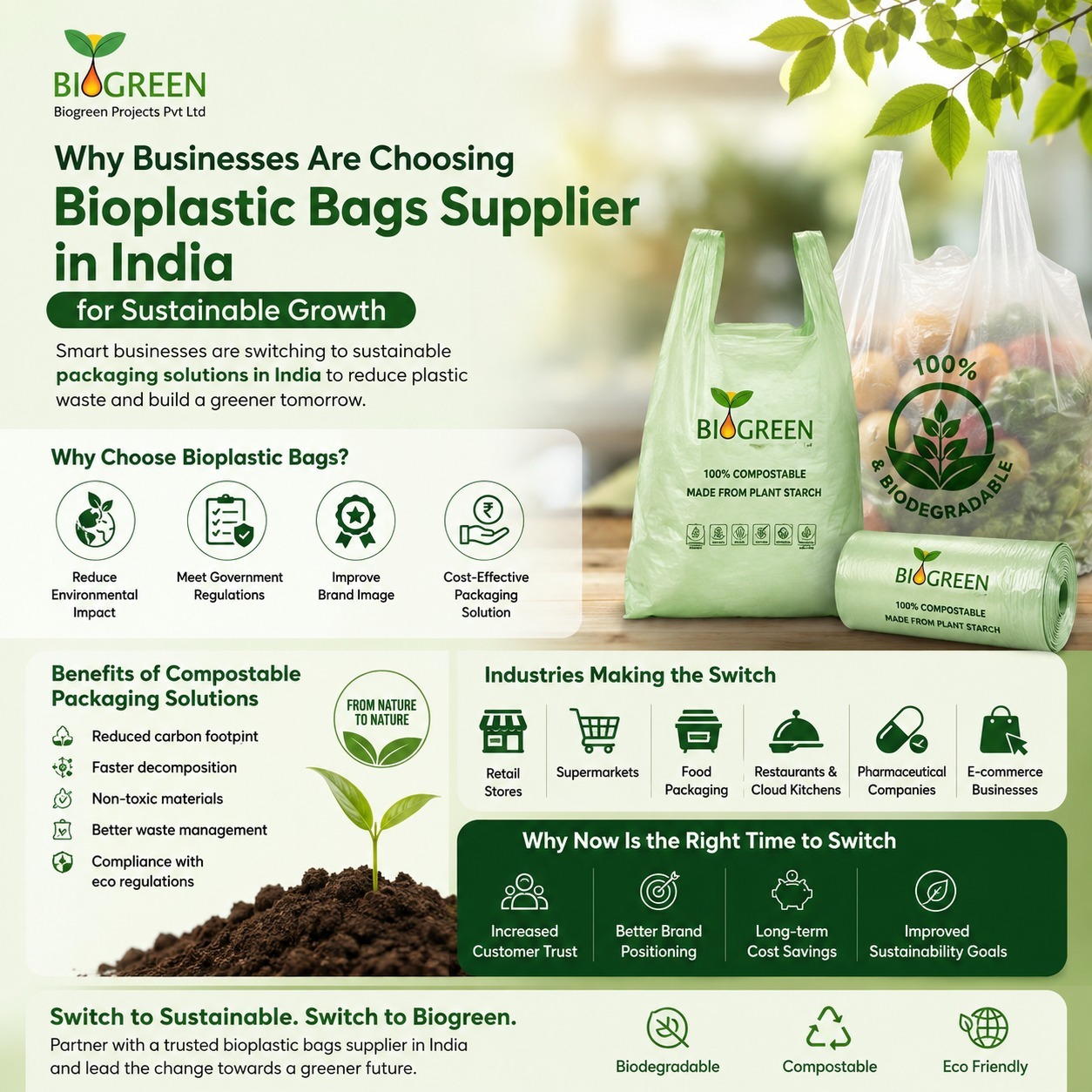
The momentum behind sustainable packaging solutions in India is not confined to one sector. Several industries are leading adoption:
Early adopters are discovering that sustainability serves as a genuine market differentiator rather than a tokenistic gesture.
Organizations making the transition to compostable packaging solutions unlock several operational and reputational advantages:
Across the packaging lifecycle compared to fossil-fuel-based plastics.
particularly under industrial composting conditions.
Noeliminating the leaching of harmful chemicals into soil and food.
since compostable packaging can be processed alongside organic waste.
Reducing the risk of fines and compliance headaches as legislation tightens.
Consumer behavior in India has reached an inflection point. Studies consistently show that urban Indian consumers are willing to pay a modest premium for products packaged sustainably. Businesses that delay this transition risk appearing outdated, while those that move early secure:
The shift toward sustainable packaging is not a temporary trend—it is a structural evolution in how Indian businesses operate and compete.
Partnering with an experienced bioplastic bags supplier enables organizations to integrate sustainable packaging solutions in India without sacrificing quality, durability, or affordability.
By embracing compostable packaging solutions today, businesses do not just future-proof themselves against regulatory and consumer shifts. They actively participate in building a cleaner, more responsible economy—one bag at a time.

Join us on this journey of sustainable packaging to make the planet a green haven


